
Case study · non-profits
Non-profits and synagogues
Gabai-Net — everything a gabbai or a non-profit administrator does in a month, in one system. In production at dozens of communities, and in a second generation written anew.
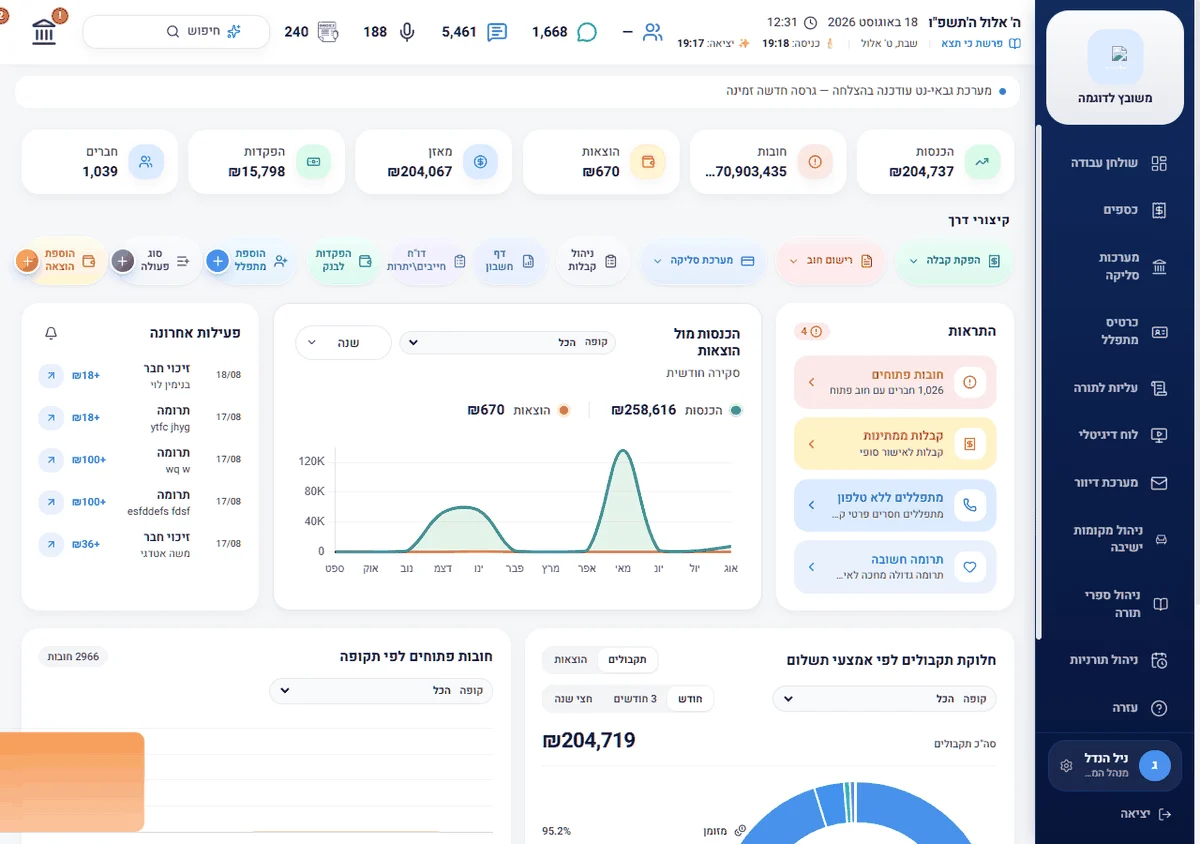
A small non-profit is usually run in three places at once: a spreadsheet for the debts, a receipt book, and one person's head. When that person changes, the knowledge leaves with them.
Gabai-Net brings everything together — finances, members, donations, aliyot, seats and the board on the wall — into one system that keeps working after the gabbai changes too.
What you see day to day
A live picture, not a year-end report
Income, expenses, outstanding dues, deposits and the balance — on one screen, updating as you work. Alongside them, alerts that point at what needs attention: dues building up, receipts awaiting approval, members with no phone number.
One member card for everything
Donations, outstanding dues, aliyot to the Torah, the seat in the synagogue, and the family's events — all under the same card. A new gabbai opens a card and sees the whole history.
Receipts and donations
Receipt issuing, donation tracking and an outstanding-dues report, a member statement, and reporting the receipts to the Tax Authority for the donor's tax credit.
Aliyot, seats, Torah scrolls and rotas
Selling aliyot, managing the synagogue's seating, tracking the Torah scrolls and arranging the duty rotas — the areas that have no place in any accounting package.
Where it becomes a complex system
The part you do not see on the main screen is the part that obliges us to connect to the world outside.
A payment hub for external providers
Payment pages, card charging, an operations report and an error report — against the payment processors the community works with. When a transaction is declined, you see who, when and why.
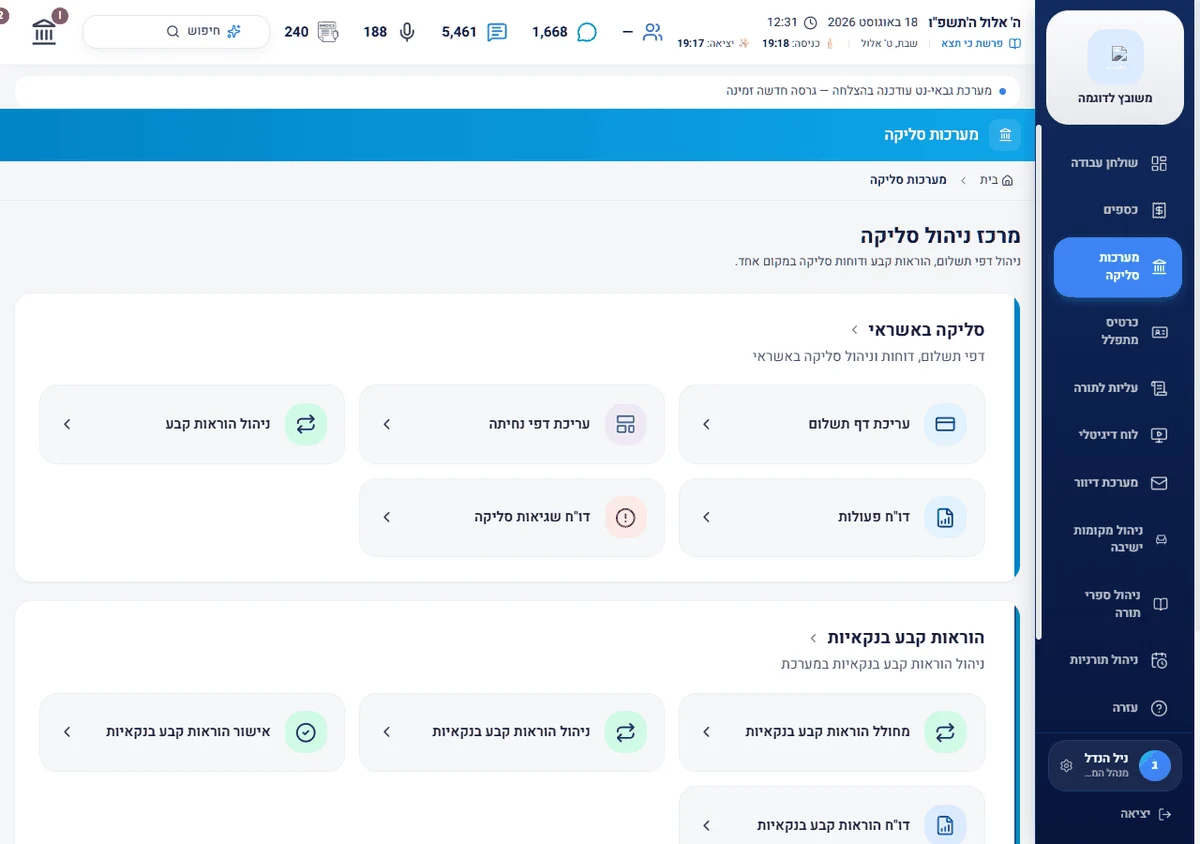
Bank standing orders, end to end
A standing-order generator, approval, management and a dedicated report — including the file sent to the bank and the processing of the response that comes back. This is the part where one mistake turns into a wrong charge for a whole community, so it was built with controls, not without them.
A digital board that knows the times
The same system feeds the screen hanging in the synagogue — prayer times, classes, announcements and memorials. The board itself is Hoshen, and it gets the times from here.
An app, APIs and background jobs
A member app, APIs for external fundraising systems, and a scheduled-task engine that runs the charges, the mailings and the reports at night. The system works even when nobody has it open.
The second generation
The veteran system has been working in production for years. The new generation — the screens here are taken from it — was written anew on a modern stack against the same database, so a community moves screen by screen instead of waiting for one big, risky switchover. It is an approach we apply with other customers sitting on a veteran core system as well.
Book a demo
Tell us about the community or the non-profit — how many members, and how the finances are run today.